
Query Fan-Out SEO: How AI Chooses Sources and What You Can Do About It
Imagine you ask one simple question online and expect a straight answer. What you get is a mini scavenger hunt. The system takes your question, splits it into little pieces, digs around for answers, and then puts them together into a single response that feels complete.
For anyone making content, this changes the game. You can’t just nail the main topic anymore. Every follow-up question, every tiny detail, every connected idea suddenly matters. If your content only answers the obvious stuff, you’re leaving the rest of the conversation for someone else to own.
That’s where query fan-out comes in. It’s about thinking beyond the first question, structuring your content so it can cover the full story, and making sure your ideas get picked up, cited, and actually used.
By the time you finish reading this, you’ll not only understand query fan-out but also have a clear plan for shaping your content so it gets noticed where it counts.
Download Our Enterprise AI Enablement Best Practices Playbook
What is Query Fan-Out?
Query fan-out is when a single question is split into multiple related sub-questions, and each of those sub-questions is answered to create a more complete response.
Think of it like a tree. The main question is the trunk. Each follow-up question is a branch. Every answer to a sub-question is a leaf. The more branches you have and the fuller they are, the healthier the tree looks. The more likely your content is to be noticed and cited.
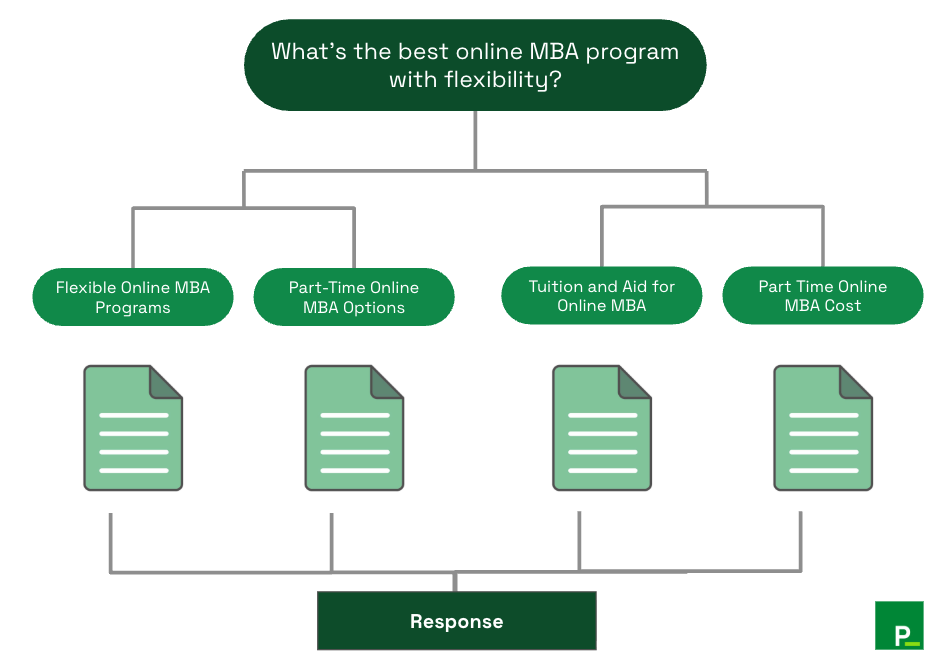
For content creators, this means a page can’t just cover the main topic. You need to consider the branches. What follow-up questions might a reader ask? What related points make your answer feel complete?
Small sections like FAQs or side notes are extra branches. They give systems more points to pull from. The trick is making it feel natural to human readers. Answers should flow together, not feel like a scattered list.
Look at your content like a tree. Spot the branches that haven’t grown yet. Fill them in. The trunk stays strong, but the tree becomes more visible, more useful, and more likely to be picked up when someone asks a question.
Why Query Fan-Out Matters for SEO
Query fan-out changes the way content gets noticed. It’s not just about ranking for a single keyword anymore. Each branch of your content, the follow-up questions and related points, offers another chance to be seen and cited.
Think of it like this. Imagine two pages covering the same topic. One covers only the main question. The other covers the main question plus all the obvious follow-ups and little side points. When a system or reader is hunting for answers, the second page has more hooks, more opportunities to be referenced, and more ways to prove it’s useful.
Even small sections matter. A concise FAQ, a well-placed example, or a side note can be enough to get your content picked up. Pages that cover only the main point are at a disadvantage. They might still rank for the main query, but they won’t capture the secondary questions, and that’s where a lot of value hides.
Here’s why covering fan-out fully gives your content an edge:
- More hooks to be cited – Each branch is another point a system or reader can reference.
- Higher content visibility – Covering multiple angles makes your page more discoverable.
- Better user experience – Readers find answers to follow-up questions without leaving the page.
- Easier updates – Pages with broad coverage can expand naturally as new questions arise.
- Increased authority – Complete coverage signals usefulness and expertise.
The biggest takeaway is this: covering the full conversation matters more than ever. A page that can answer a bunch of connected questions naturally earns more citations, more visibility, and more authority. If your content is just the trunk of the tree, it might stand tall, but it won’t branch out to capture everything a reader, or a system, might be looking for.
How AI Selects Sources for Fan-Out
Not every page gets picked up equally. Some content gets cited for a single sub-question, some gets ignored entirely. There are a few key factors that make a page stand out.
Relevance to multiple questions:
Content that covers several follow-up questions naturally has more chances to be cited. Even if a reader or system only cares about one piece, a page that answers more is more likely to show up.
Clarity and structure:
Well-structured content wins. Clear headings, short paragraphs, and logical flow make it easier to find the answer buried in the middle of a page. Lists, tables, and bullet points also help.
Authority and trust:
Pages that demonstrate credibility, through references, expertise, or comprehensive coverage, are more likely to be trusted. Being thorough and accurate goes a long way.
Coverage of related concepts:
This is where semantic and secondary keywords come in. Each branch of the content tree can include different wording, synonyms, or related ideas. That doesn’t mean stuffing keywords. It means naturally covering related points so the content answers the full conversation.
Presentation and formatting:
Readable text, visuals, examples, and structred data all help systems quickly extract answers. A small FAQ or a diagram might be the difference between being cited or being ignored.
In short, content that’s relevant, clear, authoritative, and broad gets picked up most often. The AI or system doesn’t just look at one keyword. It scans the whole tree, and the more fully the branches are covered, the more likely your page becomes a go-to source.
How to Optimize Content for Query Fan-Out: 6 Step Process
1: Generate Potential Sub-Questions
Before you start creating or updating content, you need to know what questions your audience is actually asking. Think beyond the main query. Each sub-question is a branch of your content tree. Covering them increases the chances your page will be cited and used.
Example: Main query: “Best online MBA programs”
Sub-questions:
- What are the top affordable online MBA programs?
- Which programs have flexible schedules?
- Are there part-time vs full-time options?
- What’s the average post-graduation salary?
- Which schools offer specializations like finance or healthcare management?
2: Cluster and Prioritize
Not all sub-questions are equally important. Some are asked more often, some have more impact on decision-making, and some may already be covered elsewhere. Group related questions together so your content feels organized and deliberate. Prioritization helps you tackle the most important gaps first.
Example clusters:
- Cost-related: tuition, scholarships, financial aid options
- Flexibility-related: part-time/full-time, course load, schedule
- Outcome-related: salary, job placement, alumni network
Prioritize based on what prospective students care about most. For instance, affordability and flexibility may be the top questions for working professionals.
3: Map Questions to Your Content
Once you know which sub-questions matter, figure out where they fit. Some questions can be answered in an existing section, while others may need a dedicated area or a separate page. Mapping ensures every branch has a place on your content tree and nothing gets lost.
Example:
- FAQ section: What is the difference between part-time and full-time online MBAs?
- Table: Comparing tuition and scholarship options
- Blog sidebar or callout: Top 5 programs for healthcare management specialization
4: Fill In The Gaps
After mapping, you’ll see which questions don’t have answers yet. This is where you add structured, concise, and helpful information. The goal isn’t to add fluf, it’s to make sure each branch is complete so the content tree feels full and robust.
Example:
- FAQ entry: “A part-time online MBA allows students to balance work and study, typically taking 2–4 years. Full-time options are faster but require more weekly commitment.”
- Table row: Tuition for Program A, Program B, Program C with scholarship info
- Bullet list: Career outcomes for graduates in finance, consulting, healthcare
5: Use Formatting AI System Can Read
The way you present content is just as important as the content itself. Headings, bullet points, tables, and structured data make it easier for both humans and systems to scan and extract answers. Think of it as laying out the branches so they’re easy to grab.
Example:
- H2: Flexible Online MBA Options
- Bullet list: Part-time vs full-time schedules, enrollment deadlines, course load
- Table: Programs, Tuition, Duration, Specializations
6: Track and Iterate
Creating content isn’t a one-time effort. Track which sub-questions your page gets cited for, which sections perform well, and which might need more coverage. Iterate to keep the content tree healthy and growing over time.
Example:
- Analytics show high engagement on affordability questions, low on specialization options
- Add a new section detailing healthcare and finance specializations
- Update alumni outcomes with fresh data
Common Pitfalls & What Not to Do
Even with the best intentions, optimizing for query fan-out can go sideways if you’re not careful. Here are the main traps to avoid.
1. Covering the main question only
It’s tempting to focus on the obvious query and call it done. But leaving the branches bare means your content misses opportunities. For higher education, a page that lists only the top online MBAs without addressing tuition, schedule, or career outcomes will likely get overlooked for more complete resources.
2. Adding fluff instead of substance
Filling your page with extra words just to hit more sub-questions doesn’t help anyone. Students want clear, actionable answers. A paragraph about “how great the online MBA experience is” won’t get cited or trusted unless it provides specifics, like course flexibility or alumni outcomes.
3. Ignoring structure and formatting
Even the best content can fail if it’s hard to read. Dense paragraphs, missing headings, or long blocks of text make it harder for both readers and systems to find the answers. Bullet points, tables, and FAQ sections go a long way in keeping your branches visible.
4. Overstuffing keywords
Trying to include every related term unnaturally can make content confusing. Cover sub-questions and semantic variations naturally. For example, instead of repeating “online MBA programs” in every sentence, mix in “part-time MBA,” “executive MBA,” or “flexible graduate business program” where it makes sense.
5. Forgetting to update content
Higher education programs change constantly, new specializations, updated tuition, evolving career outcomes. If your content isn’t updated, even a page that initially performed well can lose citations and authority. Treat your content tree like a living thing that needs regular care.
The Future of Query Fan-Out and What It Means for Your Content
Query fan-out isn’t going away. Pages that answer the full conversation, tuition, schedules, specializations, outcomes, get noticed, cited, and trusted. For higher education content, covering all the branches of a topic gives your programs an edge when new questions pop up.
Don’t just answer one question. Map the branches, fill the gaps, and structure your content for clarity. If you want help making sure your content gets discovered and cited, our AI Search Engine Optimization services can optimize your pages for query fan-out. To turn those insights into real growth and measurable results, our Performance Marketing team can help you drive conversions from every interaction.