
The Future of SEO: How to Stay Visible as AI Changes Search
If you’ve been paying attention to the world of search, you’ve probably noticed a bunch of new acronyms like: AIO, GEO, LLMO, and who knows what else. It might feel like every agency and marketer is trying to rebrand SEO as something shinier, fresher, and, let’s be honest, a little more buzzword-friendly.
So what’s really going on?
At its core, SEO hasn’t suddenly transformed into something unrecognizable. Search engines are still trying to connect people with the most relevant, trustworthy answers. What’s changed is how they do it, with AI-powered engines delivering direct answers, conversational results, and even fully synthesized summaries that don’t always send users clicking through to websites.
Download Our Enterprise AI Enablement Best Practices Playbook
This shift has led to new terms like AI Optimization (AIO), which focuses on optimizing for those AI-generated answers, and Generative Engine Optimization (GEO), which relates to how generative AI shapes search results. The buzz around these acronyms does reflect a real change in search technology, but also a bit of marketing theater. It’s natural for industries to create new languages as they evolve, but sometimes, these new terms can feel like repackaged SEO dressed up in AI-era clothes.
Here’s the good news: you don’t need to learn a whole new language to succeed. The fundamentals of understanding your audience’s intent, creating clear and valuable content, and ensuring your site is technically sound remain as relevant as ever. Think of these new acronyms as different lenses on the same game, not a new game entirely.
In short, the rise of AIO and GEO is a sign that AI is changing how we optimize matters more than what we call it. If you keep your focus on delivering real value and making your content easy for both users and AI to understand, you’re already ahead of most of the hype.
Foundational SEO Tactics That Still Matter (and Always Will)
With all the talk about AI shaking up search, it’s easy to get swept up thinking everything needs to change overnight. But here’s the truth: many of the SEO basics that have worked for years aren’t just “old school” they’re still your secret weapons.

Before you chase the next shiny new thing, make sure these foundational tactics are locked in tight:
1. Put User Intent First
SEO used to be about making the algorithms happy; but now it’s about making the users happy by answering real questions people have. Understanding why someone searches is your North Star. What problem are they trying to solve? What do they really want to know? Nail that, and you’re on your way.
2. Create High-Quality Content
Google’s smarter than ever, and it can spot shallow, keyword-stuffed pages from a mile away. Instead, focus on crafting content that’s thorough, accurate, and genuinely helpful. Original insights and clear explanations win every time.
3. Structure Your Content Clearly
Good content demands organization. Use headings, bullet points, and concise paragraphs to help both humans and AI scan and understand your page easily. Think of your content as a roadmap, not a maze.
4. Keep Content Fresh
Search engines love updated, relevant information. Regularly revisiting and refreshing your pages signals that your site is active and trustworthy. Plus, it keeps you ahead in fast-changing industries.
5. Ensure Crawlability and Indexation
All the great content in the world won’t help if search engines can’t find or read it. Keep your site architecture clean, fix broken links, and make sure important pages aren’t accidentally blocked from crawling or indexing.
6. Optimize for Mobile
With most searches happening on mobile devices, a responsive, fast-loading mobile experience is non-negotiable. If your site isn’t mobile-friendly, you’re giving your competitors an open door.
7. Build Clear Internal Linking
Linking strategically between pages helps spread authority across your site and guides visitors (and bots) to related content. Use descriptive anchor text and logical pathways to improve both SEO and user experience.
8. Prioritize Site Speed and Performance
Core Web Vitals and page load speed remain critical ranking factors. Slow sites frustrate users and get penalized by search engines, so invest in performance optimization.
9. E-E-A-T: Experience, Expertise, Authoritativeness, and Trustworthiness
More than ever, Google wants to surface content from credible sources. Demonstrate your brand’s expertise and build trust with transparent authorship, citations, and a strong reputation.
These tactics aren’t just “best practices” they’re the foundation that keeps your SEO strategy standing strong no matter how AI or search technology evolves. Master these, and you’ll be ready to layer on the AI-specific strategies we’ll cover next.
AI-Era SEO Strategy: What Marketers Should Do Differently Now
So, you’ve got your SEO fundamentals down, great! But as AI increasingly powers search results, there are some fresh tactics you’ll want to add to your playbook. These aren’t about reinventing SEO but about adapting it to a smarter, more conversational search landscape.
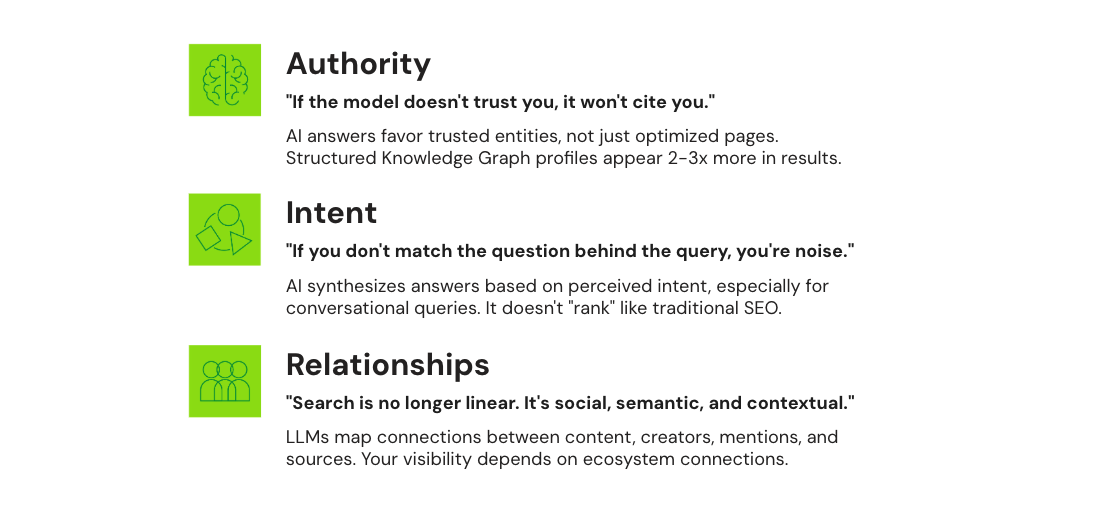
AI-Era SEO breaks down into three main buckets that we like to call the “A.I.R Framework”. This buckets AIO tactics into authority, intent, and relationship strategies. It speaks to the foundation that AI search is built on and focuses marketers on ways to improve LLM visibility.
1. Structured Data: Speak the Search Engine’s Language
Think of structured data (aka schema markup) as a way to label and organize your content so AI and search engines can understand it better. It’s like giving your content a VIP pass to the Knowledge Graph party.
Marketers should prioritize adding structured data for products, FAQs, events, reviews, and especially entities related to your brand or industry. This helps AI surface your content as rich results or direct answers, prime real estate in modern SERPs.
2. Entity-Based Optimization: Build Your Brand’s Digital Identity
Search engines today don’t just look at keywords they’re building complex profiles of “entities” like people, brands, and places. Establishing a strong, consistent presence across authoritative sites, social profiles, and data sources helps Google trust and recognize your brand.
This means thinking beyond your website; reputation management, citations, and content that reinforces your unique identity matter more than ever.
3. Semantic SEO: Optimize for Meaning, Not Just Words
Keywords alone won’t cut it anymore. Semantic SEO means focusing on the concepts behind queries and creating content that comprehensively covers related topics.
Use topic clusters, answer related questions, and help search engines understand why your content is relevant to a query not just that it contains certain words.
4. Natural Language & Readability: Write Like People Speak
AI-powered search increasingly favors content that sounds natural and easy to read. Aim for clear, conversational writing that mirrors how your audience talks and asks questions, especially important for voice search and featured snippets.
Keep sentences concise, avoid jargon, and use a friendly, human tone.
5. Long-Tail & Conversational Queries: Get Specific
People are searching with more specific, conversational queries than ever before, often typing or speaking entire questions. Tailor your content to capture these long-tail phrases, addressing precise needs and scenarios your audience cares about.
This can unlock new traffic streams and reduce competition compared to broad, generic keywords.
6. Knowledge Graph Optimization: Own Your Spot in the Web’s Brain
The Knowledge Graph powers many AI-driven search features from direct answers to info panels. Make sure your business or brand is accurately represented by maintaining up-to-date and consistent data across Wikipedia, Wikidata, social platforms, and trusted industry sites.
The more signals you send, the more likely AI will pull from your authoritative sources.
These strategies aren’t just trendy buzzwords, they’re practical steps to make sure your content isn’t just discoverable, but understood and favored by AI-powered search engines.
Master these alongside your SEO basics, and you’ll position your brand to thrive as the search landscape continues to evolve.
Looking Ahead: What Marketers Need to Prepare For
AI-driven search is no longer just a glimpse of the future, it’s already reshaping how people find information and make decisions. With multiple players investing heavily in AI-powered search experiences, the landscape is becoming more complex and competitive every day.
Marketers who want to stay ahead need to think beyond traditional SEO. It’s about embracing a mindset of continuous learning and adaptation. Algorithms and AI capabilities will keep evolving, so staying curious and agile is essential. This means regularly testing new approaches, analyzing what works, and being ready to shift gears as the landscape changes.
Building brand authority and trust has never been more important. AI relies heavily on credible, authoritative sources when choosing what content to surface in direct answers and knowledge panels. Investing in a consistent, authentic brand presence across the web from your website to social profiles to third-party platforms will pay dividends as AI-powered search continues to favor trusted entities.
We’re also moving toward a richer, more diverse search experience. Text is just one piece of the puzzle. Images, videos, audio, and interactive elements are all becoming part of how users engage with information. Marketers should prepare to optimize across these formats, meeting audiences wherever they prefer to consume content whether that’s a voice assistant or a visual search tool.
As AI changes the way visibility is measured, traditional SEO metrics like keyword rankings will only tell part of the story. New performance indicators, such as engagement with AI-generated snippets, interactions with voice queries, and overall brand lift, will become critical to understanding your impact.
Finally, the AI era calls for closer collaboration. SEO can’t live in a silo anymore. It’s a team sport involving content creators, PR, UX designers, developers, and brand strategists working together to create seamless, user-first experiences. And with AI’s growing influence, ethical considerations around transparency, privacy, and misinformation will become part of every marketer’s playbook.
The future of search is complex, but the brands that prioritize clarity, authority, and adaptability will be the ones that thrive in this new AI-powered world.
SEO’s Future Is Here - and It’s Still Yours to Shape
The future of SEO is unfolding fast, driven by AI and evolving search technologies. While the landscape may feel complex, the fundamentals remain your strongest foundation. Focus on creating valuable, user-first content and maintaining a technically sound website, these principles never go out of style.
At the same time, adapting to AI means embracing new strategies: optimizing for entities, leveraging structured data, and thinking beyond keywords to meet users where they are with clear, natural content. It’s not about chasing every new acronym or trend, but about understanding what truly drives visibility and trust in an AI-powered search world.
For marketers and brands willing to stay curious, flexible, and authentic, the opportunities are immense. By blending time-tested SEO tactics with thoughtful AI-era adaptations, you’ll not only stay visible, you’ll build lasting connections with your audience in the next generation of search.